Landscaping ideas that boost your home's curb appeal (without gutting your savings)
A potential buyer decides how they feel about your house before they ring the bell. In 8 seconds. That's the number I kept landing on when I worked with a realtor friend on her listings, and it matches what every agent I've talked to since says: the front yard does the emotional work, and the price conversation comes after. Which is annoying, because most landscaping advice is either a Pinterest gallery with no numbers or a landscaper's invoice you can't afford.
So let's do this differently. What actually moves the needle on curb appeal, what it costs, what it returns, and — because nobody asks this before planting anything — what survives the climate you're in and the maintenance schedule you'll realistically keep. I've made plenty of the mistakes I'm about to describe. One $40 move I'll show you below took a front entry from invisible to "oh, that's nice" in a single afternoon.
Key Takeaways
- The front 15 feet — entry, path, first planting bed — drives almost all of the visual impression. Everything else is supporting cast.
- Small, low-cost fixes (edging, mulch, one flowering specimen, a front-door refresh) often earn back several times what they cost at sale.
- Native and drought-tolerant plantings cut water bills and maintenance hours, and they read as intentional rather than scraggly.
- Rules matter: HOA guidelines and local permits can kill a project before you dig.
- Function beats decoration. A path people can actually walk on, at night, wins over a rare shrub.
Why the front yard outperforms the rest of your property
The back garden is for you. The front is for the street, the neighbors, the delivery driver, and the person deciding whether to book a showing. That asymmetry has a practical consequence: money spent on the front tends to show up in appraised value and buyer interest in a way that backyard improvements — a deck, a patio, a fire pit — rarely do.
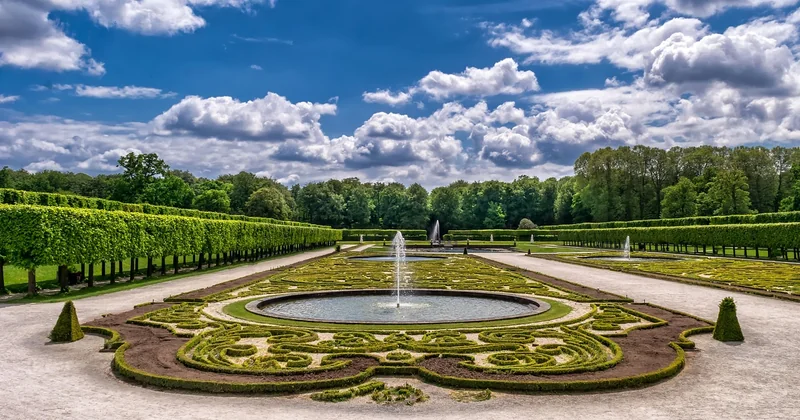
I learned this the hard way. Back in my early days of fiddling with my own house, I spent a spring weekend rebuilding a back patio. It was lovely. Nobody saw it. The following fall, I spent a fraction of that time and money on the front walk and the entry bed, and the response was immediate — neighbors stopped, mail carriers commented, and my realtor friend used photos of my entry in her listing packet.
The 15-foot rule
Stand on the sidewalk in front of your house. Everything you can perceive clearly — texture, color, shape, tidiness — sits inside about 15 feet from the street-facing facade and the walk leading to it. Beyond that, the eye registers mass, not detail.
Practical upshot:
- Fuss over the entry bed, the path edges, the door, and the first few feet of wall.
- Don't stress about the exact cultivar of a shrub 40 feet away. Nobody will ever know.
- If you have a big, awkward foundation line to cover, group plants in odd numbers — 3, 5, 7 — it reads more natural than evenly spaced singles.
Small landscaping ideas that boost your home's curb appeal
If your budget is tight or your time is tighter, this section is for you. These are the moves with the best effort-to-visible-improvement ratio I've found, and they don't require a crew.
1. Fix the bed edges before you buy a single plant
A crisp, shovel-cut edge along the lawn and beds makes a property look maintained even if the plantings themselves are mediocre. A re-edged bed with fresh mulch transforms a yard the way a fresh haircut transforms a person.
Cost: a sharp spade, an afternoon, and mulch. In my area, mulch runs somewhere in the low double digits per cubic yard delivered — a fraction of what a single purchased shrub costs. If you only do one thing, do this one.
2. Add one focal point, not twelve
The temptation when you're excited is to buy everything at the nursery. Fight it. One well-placed specimen — a small ornamental tree, a sculptural grass, a flowering shrub that earns its keep in spring — reads as design. Twelve random plants read as a yard sale.
I'll admit it took me two full seasons to accept this. My first front bed had nine species crammed into 40 square feet. It looked busy and slightly unhinged. Removing half of them and giving the survivors room made the whole thing look planned.
3. Treat the front door as landscaping
Paint, a new house number, a decent light fixture, a functional doormat. That's it. The door is the visual destination of the entire composition, and most people decorate around it while leaving it scuffed. A $40 can of paint on a dated door has, in my opinion, the single highest return of anything on this list.
4. Light the path — solar is fine
You don't need a low-voltage system with a transformer and buried wire. Good solar stake lights have gotten genuinely usable. Line the walk on both sides, spaced evenly, and your house looks inhabited and safe from the street after dark.
Curb appeal ideas for the front of the house on a budget
Let me give you actual ranges instead of "it depends." These are figures from my own projects and from quotes I've collected across several years of doing this, so treat them as rough orders of magnitude, not a bid.
| Project | DIY cost | Hired out | Visible impact |
|---|---|---|---|
| Re-edge beds + fresh mulch | Low — a few hundred | Several hundred to low four figures | Very high for the money |
| Front door paint + hardware | Under $100 | A few hundred with labor | Disproportionately high |
| Path lighting (solar stakes) | Under $100 | Low four figures for wired | High at night, invisible by day |
| New walkway | Materials only, several hundred+ | Mid four to low five figures | High if the old one was cracked |
| Lawn renovation (seed/level) | Low four figures | Multiples of that | High — a bad lawn sinks everything |
| Mature tree installation | Not realistic DIY | Four to five figures per large tree | High, but slow to pay off |
The pattern is consistent: the cheapest items cluster at the top of the impact list, and the expensive structural work (hardscaping, trees) pays off over years, not weeks. If you're selling soon, stay cheap and cosmetic. If you're staying, the structural items are worth it.
What does landscaping actually return?
I can't give you a clean percentage, and I'm suspicious of anyone who does — the figure depends on your market, your house price, and how bad things looked before. What I can tell you from watching appraisals and listings is directional: a well-kept front yard doesn't just add value, it protects value. A neglected one gives buyers a discount argument they'll use ruthlessly, and it becomes the anchor for every other negotiation.
Modern curb appeal: native and drought-tolerant planting
This is where the last decade's advice has genuinely shifted, and where a lot of older "curb appeal ideas" lists feel dated. The manicured lawn-and-boxwood look is expensive to maintain, thirsty, and increasingly out of step with both water restrictions and buyer taste.
What's replaced it — loosely — is a modern, structured, low-water aesthetic. Clean lines, gravel or mulch, ornamental grasses, architectural plants, a strong color palette of greens and deep burgundies.
Why natives and drought-tolerant plants win on maintenance
- They've evolved for your local rainfall and soil, so they need less coddling.
- They tend to be more pest- and disease-resistant than exotics.
- Once established, many need almost no supplemental water.
- They support pollinators, which is a genuinely nice side effect you'll notice.
One caveat I'll be honest about: native plantings can look sparse and weedy in their first year or two before they fill in. Plan for that. Group them densely and use a mulch or gravel ground cover to keep it looking deliberate rather than neglected. And check what's actually native to your region — a plant native to a wet climate will struggle if you're in a dry one, even if it's "native to the country."
Mistakes, rules, and the stuff nobody warns you about
Before you buy anything, find out what you're allowed to do. HOA covenants frequently dictate plant heights, fence styles, mulch types, and even allowable colors. In many municipalities, adding a walkway, a retaining wall, or a significant grade change requires a permit, and digging without knowing where utility lines run is a genuine safety issue — the free locate service exists for a reason.
The other recurring mistake is planting for the plant's mature size rather than its nursery-pot size. The cute little shrub in a one-gallon container is going to be six feet wide in a few years, and it will eat your path, your windows, and your patience. Read the mature size on the tag and space accordingly. I've moved more shrubs than I'd like to admit because I ignored this.
Practical questions you're probably asking
How do I find a good landscaper near me?
Ask for photos of recent front-yard installations, not their landscape-design portfolio. Ask whether they sub out the work or do it themselves. Ask for a client you can call. And get the plant list in writing — species names, not "assorted shrubs" — because the difference between a $15 shrub and a $150 one is invisible in a photo and very visible on an invoice.
What should I plant if I want low maintenance?
Ornamental grasses, native perennials suited to your region, and ground covers that crowd out weeds. Avoid anything that requires constant pruning to look right — that's a maintenance bill disguised as a plant. Match species to your local climate zone rather than to what looked good in a magazine.
Does hardscaping or planting matter more?
Hardscaping reads first because it's structural, and a cracked walkway drags down everything around it. But it's also the most expensive to change. If your hardscape is sound, plants give you far more visual change per dollar. If your hardscape is failing, fix that first — no amount of planting hides a broken path.
What I've come to believe, after all the weekends spent edging and mulching and second-guessing shrub placement, is that curb appeal isn't really about beauty. It's about evidence. A tidy front yard is proof that someone has been paying attention to this house. Buyers read maintenance as character, and they read neglect the same way.
Which means the highest-value thing you can do isn't a plant at all. It's picking one small area, doing it well, and actually keeping up with it. The house that looks cared for beats the house with the fanciest plantings every single time. Start with the edge of the bed and the front door. You'll know within a week whether you want to go further.